Emotions in dog training
Food for thought and one pretty fuzzy exercise

Let’s start this page with some thoughts about emotions. This is something I’ve had loads of fun with recently. The science behind it is far from new - Jaak Panksepp coined the terms years ago - and from what I hear the same way of thinking is used in human psychology, too. So far I’ve introduced this in two of my classes and it worked astonishingly well. One class really ran with the concept and got amazing training results after just a few minutes. So let’s take a short look into the theory before applying this to our own training.
One way to talk about feelings is to divide them into physical feelings and emotional feelings. We are really good at recognizing and satisfying the physiological or bodily feelings like hunger or thirst. In fact in most countries the rules regulating animal care focus on those needs. As a rule we are much worse at recognizing the emotional part of our dog’s feelings, but they are at least as important as seeing to the physiological needs. Unfortunately our dogs can’t talk about their emotions (this is not easy for most humans either), so the only way we can guess what the dog is feeling is by looking at their body language and behavior. I’m sure there will be a few posts in the future about body language and how to interpret your dog’s behaviors, but for now I trust that most of you reading here have a good grasp of what to look for.
Panksepp suggests that there are seven primary affective systems or core emotions:
- FEAR - anxiety, the dog is scared about something. This has great influence on learning, mainly through sensitization, reduced performance capability and the risk of defensive aggression.
- GRIEF - the dog is sad or depressed. This is the emotion in social separations and loss.
- RAGE - the dog is angry or even furious. Frustration can play a role here.
- LUST - sexual arousal.
- PLAY - This is where the fun is and unfortunately a pretty underrated emotional system.
- SEEKING - the dog is exploring, expectant and curious. This is also an often forgot core emotion which nevertheless has great influence on learning.
- CARE - is all about raising puppies, parenting and the warm feeling we get when we cuddle our dogs. It influences a puppy’s personality and stress endurance.
All these core emotions have an evolutionary background, i.e. an animal species benefits from having these emotions and acting driven by them. You could write pages about all of them, but I think you’ll get my drift and don’t need so much more to start thinking about your training.
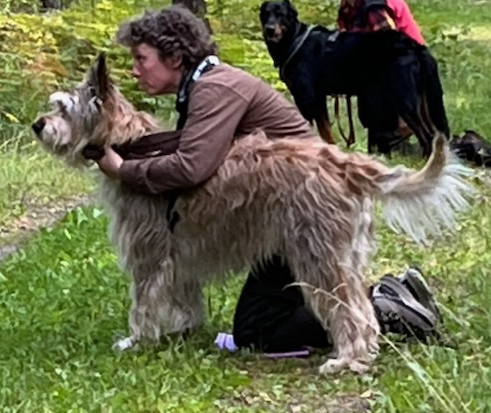
My take on this is that for every exercise and behavior you want to train there are core emotions that will help and core emotions that will work against you. By identifying these you will be able to tweak your training and make it more efficient. I’m convinced that you are already doing this in many ways, but doing it consciously might help you get the little extra your dog needs. Just by thinking about this one of my classes devised their own exercises, specifically tailored to their dogs and what they wanted to train. I should probably mention that these dog owners weren’t very experienced. They had taken two or three classes, but these were first time dog owners.
In order to start I want you to think about something specific that you are training just now. This can be a rally obedience sign, a trick, basic everyday obedience, anything really.
- Try to pick out the helping emotions and angle your training in a way that will make it easy for your dog to feel that emotion. This can mean changing the sort of your rewards or the way you deliver them, changing the way you act in an exercise or it might give you input to train a behavior in a completely different way.
- Think about the emotions that will make your training harder and make a detailed plan on how to avoid these. This can mean a change of environment, a change in your body language, a change of rewards or anything else that will keep your dog in a helpful emotional state.
This may sound really fuzzy and borderline esoteric, but you can get a different approach that may really help you with everything from the tiniest detail to the bigger picture. You can also use this to slightly change any old exercise or any exercise in any class to get a slightly different angle that will help your dog a little extra.
You are welcome to ask questions in the comments if something is unclear. I would also love to hear your thoughts so please leave a comment. And I promise a more hands on approach in the next post.
Some examples
Eye contact
The emotions that will help you can be PLAY so that you are fun person that the dog actively will seek out, SEEKING by engaging the dog’s curiousness and need to explore or CARE by creating a trusting atmosphere and closeness between you and your dog.
If you want to incorporate PLAY you could go for some fun wrestling as reinforcement or some tug of war, depending on how your dog likes to play. You want your dog to focus on you so try to keep to games that will keep the dog near you instead of chucking balls into orbit.
Thinking more about CARE may lead you to train with calm social rewards and calm and quiet praise. As one of the dog owners in my class said: instead of pep talk we use focus talk. This will make you more relaxed and easier to be with, which in turn will make your dog feel more at ease.
If you want to incorporate the SEEKING system think about the delivery of your rewards. Let the dog seek the treat instead of presenting it or place your reward a few meters away so the dog can seek it out when given a free signal (“extern belöning” på svenska). This can generate a whole new level of focus and eye contact.
On the other hand, if your dog is easily distracted SEEKING can be part of the problem and an emotional system that’s really not helpful at all. Even PLAY can crash your training if your dog’s arousal level gets too high, making it hard for the dog to concentrate. And speaking of arousal, LUST of course also ruins training sessions when you want your dog to concentrate. GRIEF and FEAR are systems that make reinforcement training really hard so try to avoid those, too.
Wait in the car or in a crate
Here the two main emotions most probably are CARE and GRIEF. There may be some issues with boredom and frustration so for some dogs RAGE might come into this, but I think for most dogs the problem is GRIEF and that we should try to counter that with CARE. PLAY and SEEKING are most probably a little too high in arousal to help here, but if you got a calm dog you can think about those, too.
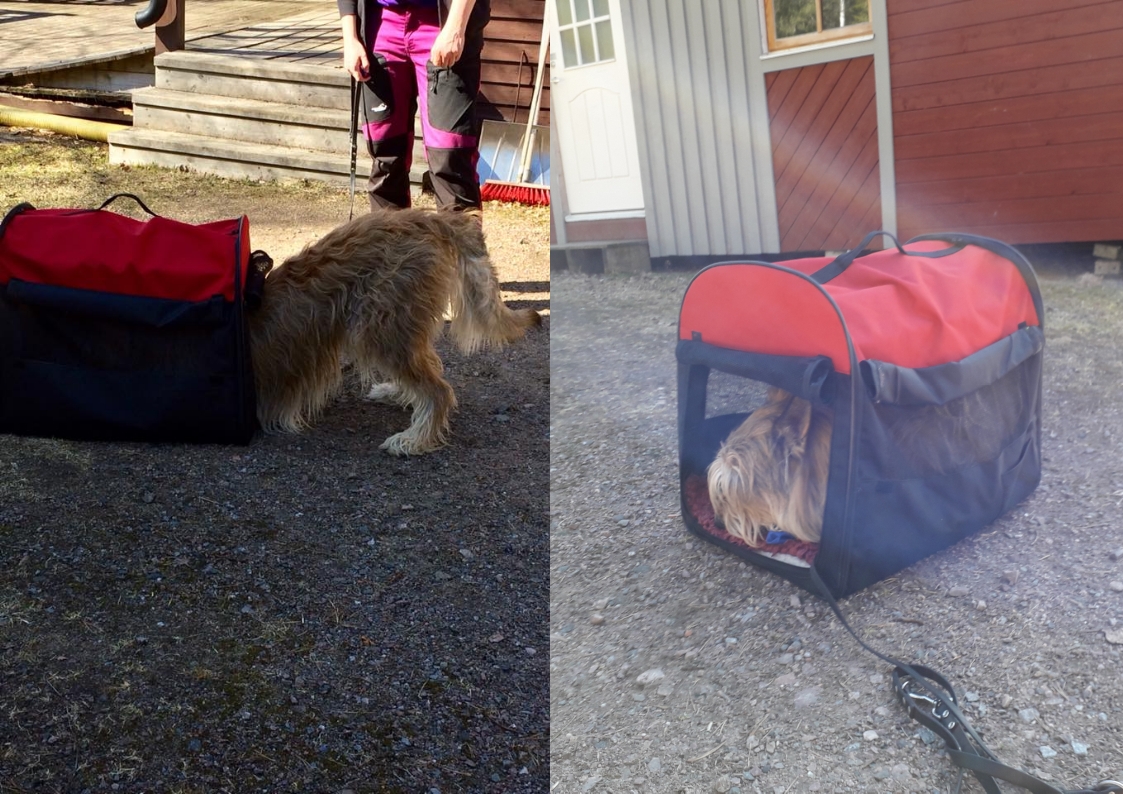
To train within the CARE system we need to think about what makes you feel like a good and loving dog carer. I suggest trying to figure out what makes your dog the most comfortable, because I really like it when I find something that makes my dog all cozy. My dog likes to use his teddy bear as a pillow so of course I go looking for the bear when it’s missing. He also loves to snuggle up with cushions all around him so I make sure to not just pack a flat blanket when he is supposed to settle down somewhere. My dog’s space in the car always includes a really comfortable dog bed. Other dogs have other preferences. Many dogs like it warm, but I’ve also had a dog in a class where the owner brought in a cooling blanket, because the dog liked that best. If you feel that you have done everything to make your dog feel loved and cared for that in turn should make your dog feel safe and relaxed. On the other hand, if you feel like a monster for leaving your dog in the car or in a crate your dog will likely pick that up and get stressed.
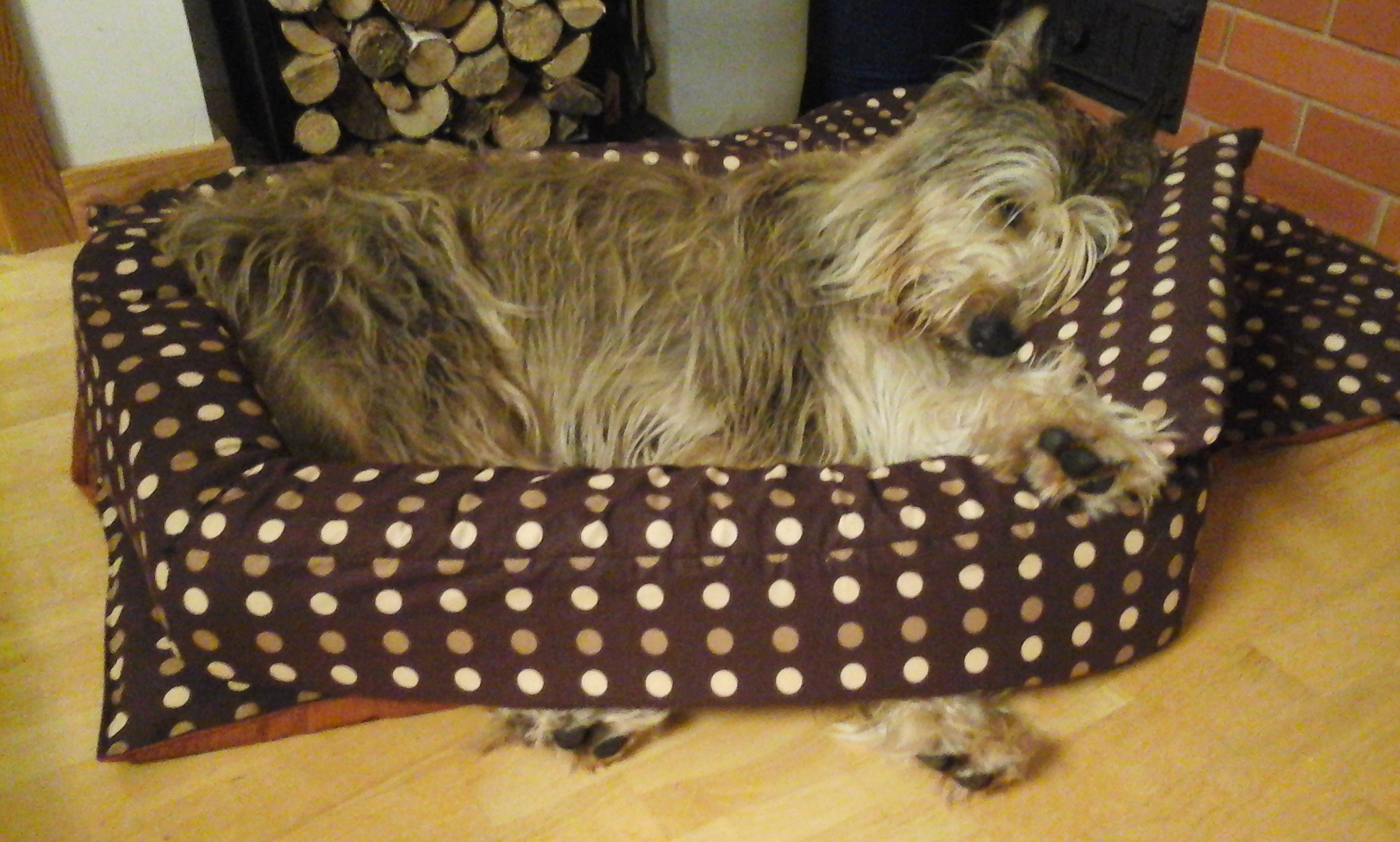
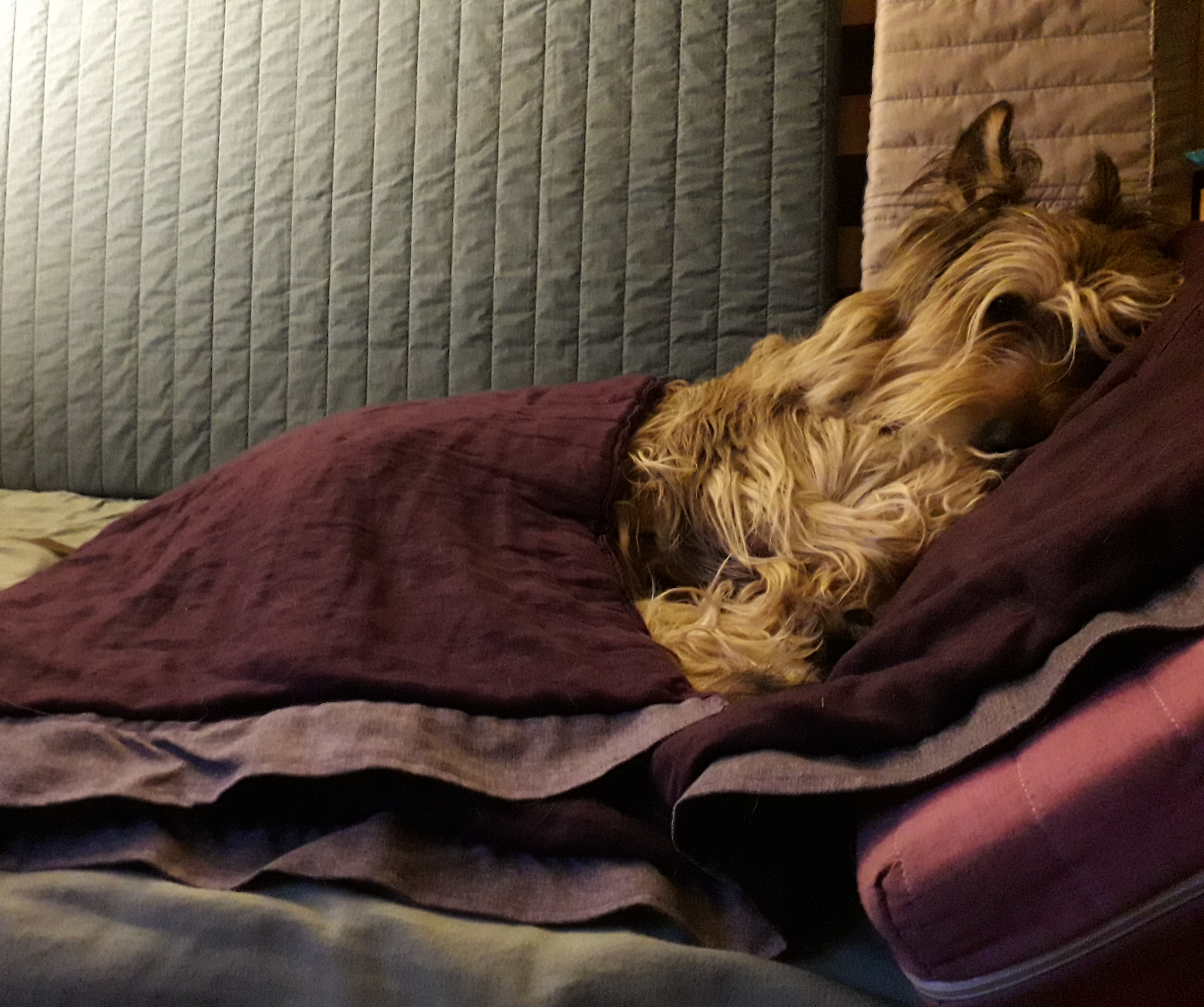
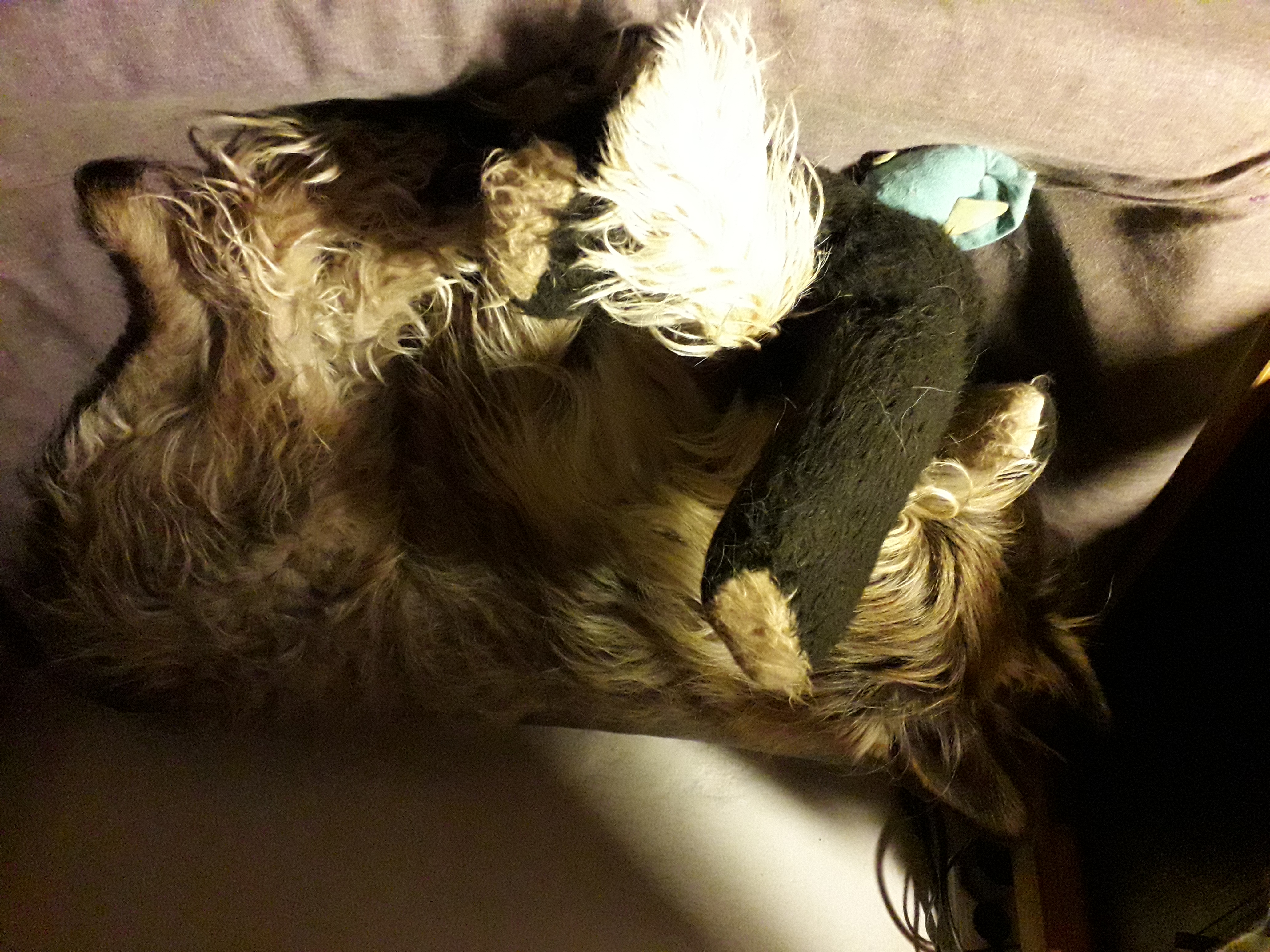
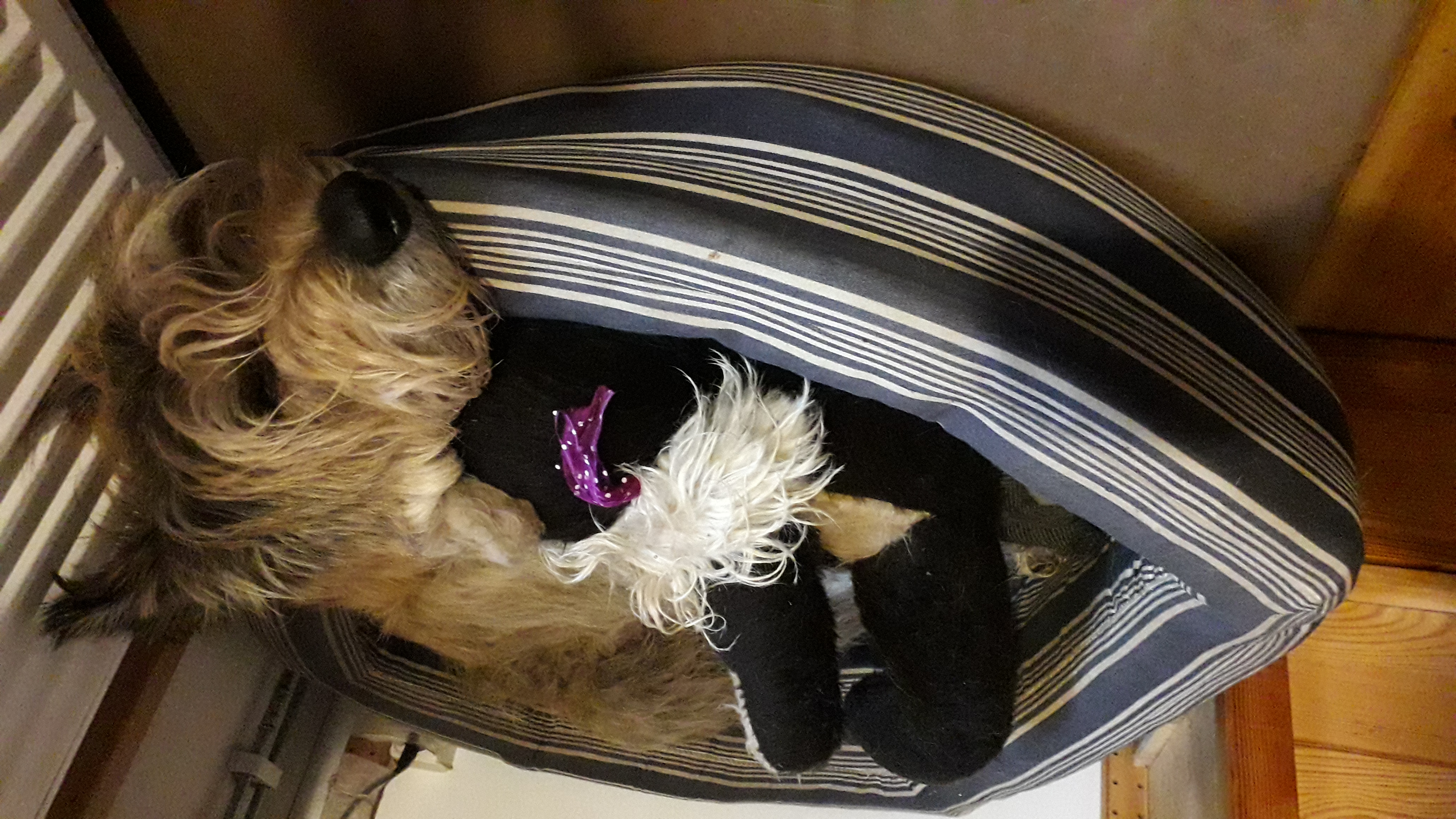
Try to avoid activating the GRIEF system. The most common mistake in crate training is asking the dog to wait for too long too soon. If you also close the door and/or the dog doesn’t like being in enclosed spaces FEAR may work against you, too. There is quite a risk of sensitizing your dog and of building in an expectation of FEAR or GRIEF. Avoiding this is what most training plans for crate training are about, reminding you of all the small steps to train. Keep your training in your dog’s comfort zone. The dog needs to trust you that you neither will close the door too soon or stay away for too long. You will build trust in every training session and you will get there in the end, if your training engages the right emotional systems for your dog.
These are just examples and there is room for loads of more tips to get your dog in the right emotional state. Leave a comment if you found something that works!